Permanent Collection / Fluxus
Ensemble
FROM FILLIOU TO BIJL: ART AS LIFE
In the space adjacent to the lavatories, we present a number of artists from the collection who play with, problematize, or even try to abolish the boundaries between art and life.
A key focus in the M HKA Collection is the happening, which is closely related to Fluxus, an art form that, since the sixties, aims to merge art and life. Incessantly, and with a great sense of humor, self-declared 'genius without talent' Robert Filliou calls the status of the artwork into question. According to him, everyone is an artist, and it is the task of all artists to demonstrate this.
Guillaume Bijl wants the viewer to directly engage with art. His installations are sometimes a reality in a non-reality, or vice versa: fictions in reality. His works are both hyper-realistic, surreal and tragicomic.
Other works on view by, among others, Paul De Vree, Anna Bella Geiger, Carlos Ginzburg, Rustam Khalfin, Martin Kippenberger, Léa Lublin, Danny Matthys, Eugenio Miccini, Luciano Ori, ORLAN, Anatoly Osmolovsky, Lamberto Pignotti, Sarenco, Nicolás Uriburu, Ben Vautier and Peng Yue.

Items
View all-

Neighbourhood's Nap (Taub...
Martin Kippenberger, Neighbourhood's Nap (Tauben haben noch keinen Krieg verhindert), 1990. Installation, wood, plaster board, plastic, cassette player, 71.5 x 71.5 x 20 cm.
-

Documentation of the perf...
Anatoly Osmolovsky, Documentation of the performance Journey of Netsezudik to the Land of the Brobdingnags (Mayakovsky/Osmolovsky) , 1993. Photography.
-

Northern Barbarians, part...
Rustam Khalfin, Northern Barbarians, part 2: Love Races, 2000. Video, dvd, 00:07:00.
-
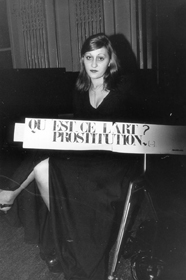
Qu'est-ce l'art?
Carlos Ginzburg, Qu'est-ce l'art?, 1974-2017. Photography.
Actors
View all-
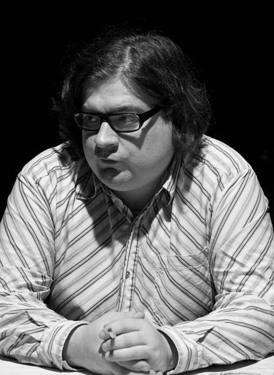
Anatoly Osmolovsky
Anatoly Osmolovsky is not only an artist, yet also theoretician, curator, publisher and performance activist. Another aspect of Osmolovsk
-

Luciano Ori
No description.
-
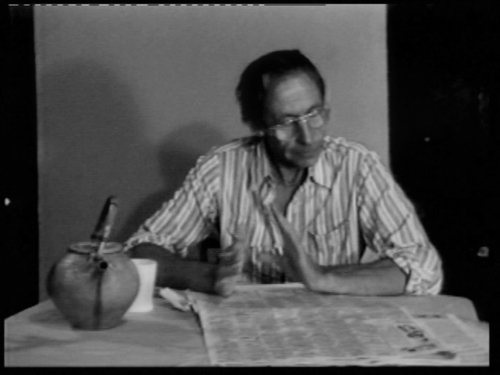
Robert Filliou
"L’art est ce qui rend la vie plus intéressante que l’art" - Robert Filliou Robert Filliou was a French neo-Dadaist also involved in the
-
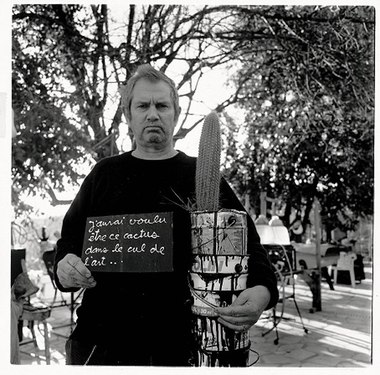
Ben
Benjamin Vautier (b. Napels, 1935), better known as Ben, is a French Fluxus artist born in Italy to an Irish mother and a Swiss father. After