Office Baroque
Ensemble
Invited by the ICC to come and do something in Antwerp, Matta-Clark reacted enthusiastically. In his first response, he asks only for a ‘spot’ – the rest he would see to. In his letter to Flor Bex from July 28, 1976, he wonderfully summarizes the approach and commitment of anarchitecture: ‘My approach consists of working with everything possible, and thus our idea of making the possible elastic. I use the urban fabric in its raw, abandoned state and transform unused structures or spaces into revitalized places. The actual space in its final state is the ‘exhibition’, and hopefully it will lead its own life in the community.
And so it happened: from amongst several proposals, Matta-Clark opted for an empty office-building on the Ernest van Dijkkaai, because of its central location right on the main tourist route. After having worked for years in America’s back streets and rundown areas of the its cities and suburbs, in Europe he finally gets a chance (in Paris and in Antwerp) to go to work and make his mark in the heart of the city, so that his ‘performance’ (the making of his building cuts) may be all the more visible.
Know more? Click here for more information about the history of the project, the progress of the project and the demolition.

Items
View all-
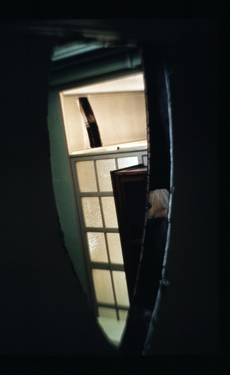
Office Baroque: color sli...
Florent Bex, Gordon Matta-Clark, Office Baroque: color slides. Photography, color slide.
-
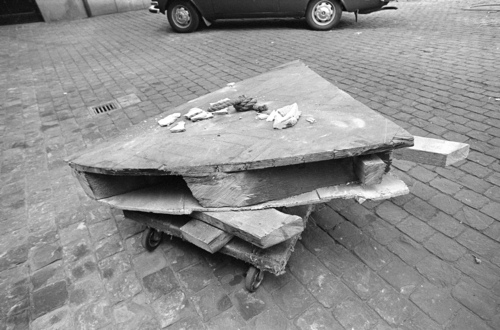
Office Baroque removals: ...
Gordon Matta-Clark, Office Baroque removals: photographic documentation. Photography.
-

Office Baroque: photograp...
Gordon Matta-Clark, Office Baroque: photographic documentation, 1977. Photography.
-

Office Baroque
Gordon Matta-Clark, Office Baroque, 1977. Print, paper, 89 x 62 cm/ 91.5 x 64.5 cm.
Actors
View all-
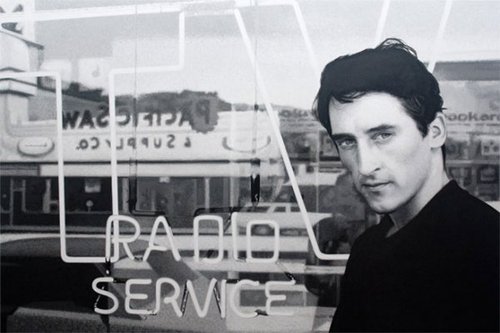
Ed Ruscha
Edward Ruscha (1937, US) is considered one of the leading painters of our times. He had a Catholic upbringing in Oklahoma and moved to Los An
-

Tapta
Maria Wierusz-Kowalski aka Tapta arrived in Belgium as a political refugee at the age of 18, after the liberation of Warsaw. In 1949 she grad
-

Marthe Wéry
Marthe Wéry is undoubtedly one of the major Belgian artists of the second half of the 20th century. In 2001, following a retrospective at Boz
-
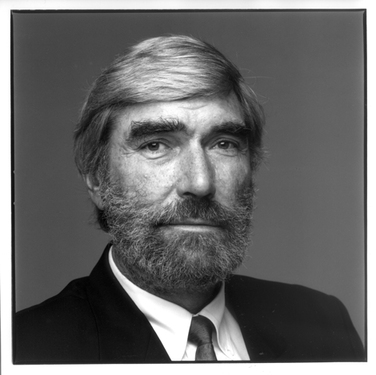
Florent Bex
Studies: PhD Art History and Archeology, University of Gent (1964) Most important professional jobs: 1972-1981: Director of the International
Ensembles
View all