Joseph Beuys' Eurasia
Ensemble
The term Eurasia refers to the land mass, or supercontinent, that includes the regions of Europe and Asia. Within the work of Joseph Beuys, Eurasia, undoubtedly inspired by the work of philosopher Rudolf Steiner (1861-1925), has a central place as a complex anthropological and philosophical concept. Beuys used to problematise the artificial separation between “East” and “West”. The artist wanted to unite the divided Europe and at the same time link what he perceived as Asian intuition and spirituality with European realism and rationality. Eurasia for Beuys is an open space without physical or ideological boundaries. The Eurasian artist is no longer focused on himself but on humanity and culture. Eurasia was also a way for Beuys to look away from America as a force of modernity and hegemony. Beuys only travelled to Asia once, visiting Japan in 1984.

Items
View all-

Intuition
Joseph Beuys, Intuition, 1968. Object, wooden box, pencil (signed), 30 x 20 x 6 cm.
-
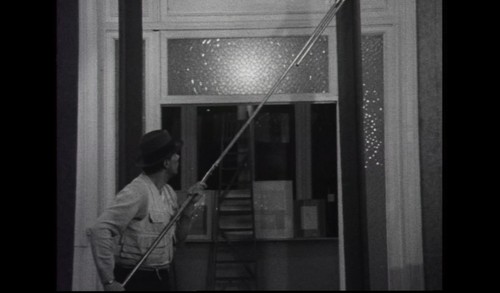
Eurasienstab, 82 min flux...
Joseph Beuys, Eurasienstab, 82 min fluxorum organum. Film, 00:21:49.
-

Transsibirische Bahn
Joseph Beuys, Transsibirische Bahn, 1970. Video, music video, 00:22:00.
-
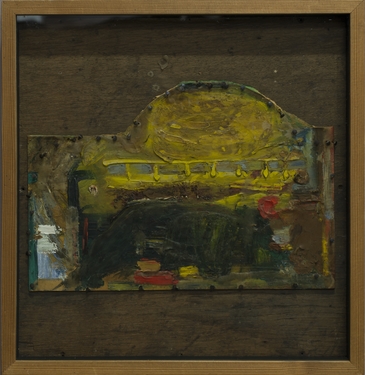
Grab des Dschingis
Joseph Beuys, Grab des Dschingis, 1957. Object, oil paint, tempera, gold bronze, wax on cardboard box, nails, brown-stained wooden board, 36 x 34.5 x 1.2 cm.
Actors
View all